The Vial Duration Formula
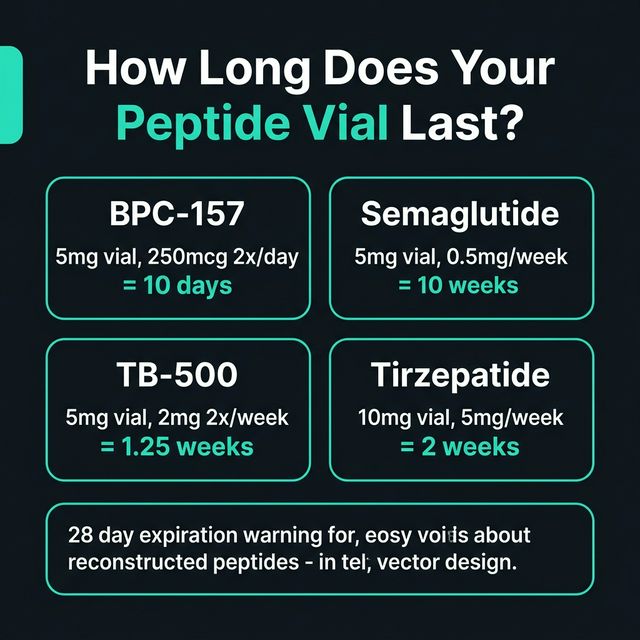
Total doses in vial = Total peptide (mcg) ÷ Dose per injection (mcg)
Days lasting = Total doses ÷ Injections per day
Example: A 5 mg (5,000 mcg) BPC-157 vial at 250 mcg twice daily = 20 total doses = 10 days of use.
The 28-Day Shelf Life Rule
Most reconstituted peptides remain stable for 21-28 days when refrigerated at 2-8°C. After this period, peptide degradation increases significantly. For this reason, if your usage rate means the vial will last longer than 28 days, you have two options:
1. Use a smaller vial size (e.g., 5 mg instead of 10 mg)
2. Add less BAC water to create a more concentrated solution (fewer total injections, faster use)
Our Vial Duration Calculator flags when your protocol exceeds the 28-day limit.
Cost-Per-Dose Calculation
Cost per dose = Vial price ÷ Total doses in vial
Example: A 5 mg BPC-157 vial costs $40. At 250 mcg/dose, there are 20 doses. Cost per dose = $40 ÷ 20 = $2.00 per injection.
Include the cost of BAC water ($5-10 per 30 mL vial, lasts 10+ reconstitutions) and syringes ($0.15-0.30 each) for a complete cost analysis.
Factors Affecting Vial Duration
• Dose size: Higher doses deplete the vial faster
• Dosing frequency: Twice daily cuts duration in half vs. once daily
• BAC water volume: More water = more volume per dose = same duration but larger injection volumes
• Vial size: 10 mg vials last twice as long as 5 mg vials at the same dose
Multi-Peptide Considerations
If stacking multiple peptides from separate vials, each vial depletes independently. Some researchers reconstitute multiple peptides into the same vial to reduce injection volume — use our Blend / Stack Calculator for proper volume calculations.
Signs of Peptide Degradation
• Cloudiness or particles in a previously clear solution
• Change in color (most peptide solutions should be clear and colorless)
• Reduced efficacy at the same dose
If you notice any of these signs, discard the vial. Never use a visually compromised solution.