Semaglutide
GLP-1 receptor agonist FDA-approved for type 2 diabetes (Ozempic) and weight management (Wegovy).
🔬 Mechanism of Action
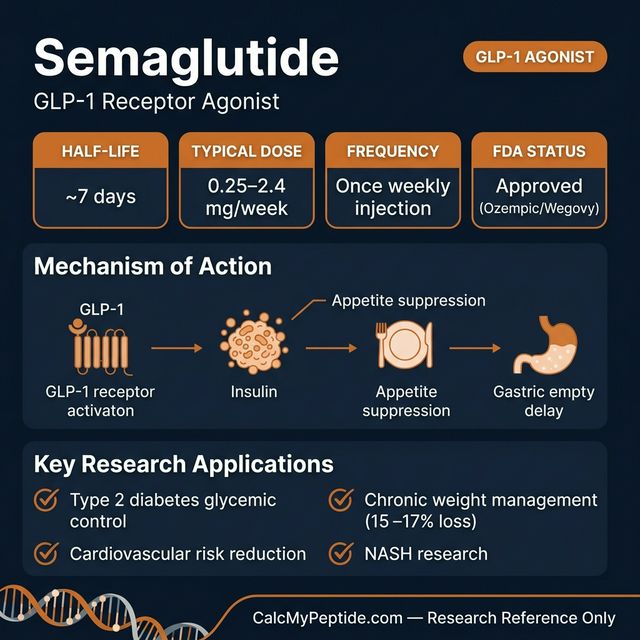
Semaglutide is a GLP-1 (Glucagon-Like Peptide-1) receptor agonist with 94% homology to native human GLP-1. It mimics the incretin hormone GLP-1, which is naturally released after eating. Its mechanism involves multiple pathways: (1) stimulating insulin secretion from pancreatic beta cells in a glucose-dependent manner, (2) suppressing glucagon release from alpha cells, (3) slowing gastric emptying to increase satiety, and (4) acting on hypothalamic appetite centers to reduce food intake.
Semaglutide has a 7-day half-life due to albumin binding and DPP-4 enzyme resistance, allowing once-weekly dosing. It is FDA-approved as Ozempic for type 2 diabetes, Wegovy for chronic weight management, and Rybelsus in oral formulation. Clinical trials (STEP program) demonstrated 15-17% body weight reduction at the 2.4 mg dose.
Source: FDA Label (Wegovy), PMID: 33567185 (STEP 1)
📜Background & History
Semaglutide was developed by Novo Nordisk through systematic modification of native GLP-1 to resist DPP-4 degradation. Its C18 fatty acid chain enables albumin binding, extending half-life to 7 days. FDA-approved as Ozempic in 2017 for type 2 diabetes and as Wegovy in 2021 for chronic weight management — the first weight loss drug approved for obesity as a chronic disease. The STEP trial program (2021) demonstrated 15–17% body weight reduction, redefining obesity pharmacotherapy.
🎯 Research Use Cases
- ✓Type 2 diabetes: glycemic control with cardiorenal protection
- ✓Chronic weight management (BMI ≥30 or ≥27 with comorbidity)
- ✓Cardiovascular risk reduction in T2D (SELECT trial: 20% CV event reduction)
- ✓Non-alcoholic steatohepatitis (NASH) — Phase III trials ongoing
- ✓Compounded research: body recomposition protocols
💉 Dosing Protocol
| Typical Dose | 0.25-2.4 mg/week |
| Frequency | 1× weekly |
| Half-Life | ~168 hours (7 days) |
| Common Vial Sizes | 3 mg, 5 mg |
🧪 Reconstitution Example
⚠️Safety & Considerations
Semaglutide is FDA-approved for type 2 diabetes and weight management. Common side effects include nausea, vomiting, diarrhea (usually transient during dose escalation). Contraindicated in patients with a personal or family history of medullary thyroid carcinoma (MTC) or Multiple Endocrine Neoplasia syndrome type 2 (MEN 2). Not recommended during pregnancy.
⚡Interactions & Contraindications
Contraindicated: personal/family history of medullary thyroid carcinoma or MEN2. Do not combine with other GLP-1 agonists or DPP-4 inhibitors (additive effects without clear benefit). May require insulin dose adjustment in T2D patients. Slowed gastric emptying affects absorption of oral medications — separate timing by 1 hour.
🔗Synergies & Common Stacks
NOT a synergy — combining two GLP-1 agonists is contraindicated due to additive GI side effects and risk of hypoglycemia without additional benefit.
BPC-157's GI protective effects may help manage GLP-1-induced nausea and gastric slowing during dose escalation, supporting tolerability.
❓ Frequently Asked Questions
What is the standard semaglutide dose escalation?▼
How do I calculate semaglutide syringe units?▼
Can I take semaglutide with other peptides?▼
What is the difference between Ozempic and Wegovy?▼
📖 References
- Wilding JPH, et al. “Once-weekly semaglutide in adults with overweight or obesity (STEP 1).” N Engl J Med (2021). PMID: 33567185
- Rodbard HW, et al. “Oral semaglutide versus empagliflozin in patients with type 2 diabetes (PIONEER 2).” Diabetes Care (2019). PMID: 31530667
- Marso SP, et al. “Semaglutide and cardiovascular outcomes in patients with type 2 diabetes.” N Engl J Med (2016). PMID: 27633186