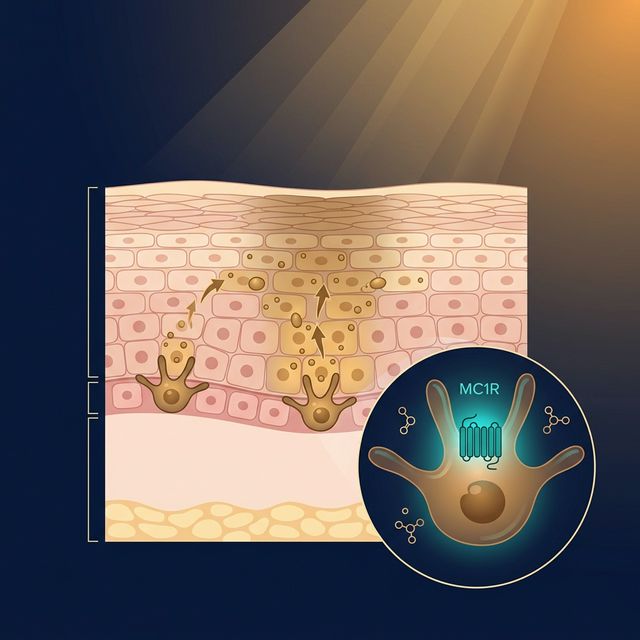
What Melanotan II Does to Your Skin
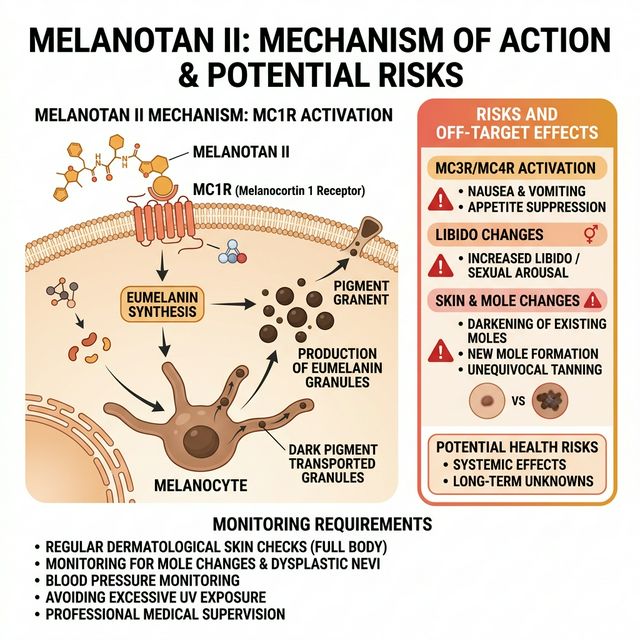
Melanotan II is a synthetic analog of alpha-melanocyte stimulating hormone (α-MSH) that activates melanocortin-1 receptors (MC1R) on melanocytes — the skin cells that produce melanin. When MC1R is activated, melanocytes increase production of eumelanin, the brown-black pigment responsible for tanning. The result: skin darkening without UV exposure, or accelerated and deeper tanning with reduced UV exposure.
The tanning mechanism is physiologically real — it produces actual melanin, the same pigment that natural UV tanning produces. This is not a surface dye or stain. The melanin integrates into the epidermis and provides some degree of UV photoprotection. Studies have shown that melanotan II-induced tanning provides a measurable increase in minimal erythema dose (MED) — the UV threshold for sunburn — of approximately 40-60% after loading phase completion.
Melanotan II was originally developed at the University of Arizona by Victor Hruby and Mac Hadley in the 1990s as a potential skin cancer prevention agent — the hypothesis was that increasing melanin density would protect fair-skinned individuals from UV-induced DNA damage. The compound never completed the regulatory pathway for approval, but it became one of the most popular self-administered peptides worldwide, particularly in Australia, the UK, and Scandinavia.
The Real Risks: Not Just Side Effects
Melanotan II is not a clean drug. It activates multiple melanocortin receptors (MC1R, MC3R, MC4R, MC5R), producing effects beyond tanning: nausea (common, particularly during loading phase — 30-60% of users), facial flushing, appetite suppression (MC4R), spontaneous erections and increased libido (MC4R — the same mechanism as PT-141), and elevated blood pressure in some users.
The more serious concern is dermatological. Melanotan II stimulates all melanocytes, including those in existing moles (nevi). Mole darkening is extremely common — virtually universal in users. This creates a clinical problem: darkening and changing moles are one of the primary screening criteria for melanoma. Dermatologists cannot easily distinguish between melanotan II-induced nevus changes and early melanoma using dermoscopy. Several case reports have documented melanoma diagnosis in melanotan II users (though causation versus detection confounding is debated).
The theoretical mechanism for melanoma concern: melanotan II does not cause DNA damage directly, but chronic melanocyte stimulation in the context of existing UV damage could theoretically promote neoplastic transformation. The evidence is insufficient to conclude that melanotan II causes melanoma, but equally insufficient to conclude that it does not. If you have a family history of melanoma, many dysplastic nevi, or fair skin type I, the risk-benefit calculus leans heavily against use.
Dosing Protocol If Used
Melanotan II protocols typically follow a two-phase approach: a loading phase (higher frequency, building melanin) followed by a maintenance phase (lower frequency, sustaining pigment). Loading: 0.25-0.5 mg subcutaneously daily for 2-4 weeks. Start at the lowest dose (0.25 mg) to assess tolerance — nausea is dose-dependent and usually worst during the first 3-5 injections. Many users take an antihistamine or ondansetron 30 minutes before injection to manage nausea.
Maintenance: after desired pigmentation is achieved (typically 2-3 weeks into loading), reduce to 0.5 mg every 3-7 days to maintain the tan. The melanin produced is real and lasts through the normal epidermal turnover cycle (approximately 28-45 days), so maintenance dosing is relatively infrequent.
Critical safety practices: photograph all moles before starting and at regular intervals during use. Have a dermatological full-body skin exam within 3 months of starting and every 6-12 months during use. Discontinue immediately and see a dermatologist if any mole shows asymmetry changes, border irregularity, color variation, or diameter increase. Never use melanotan II as a substitute for sunscreen — the UV protection from melanin alone is insufficient to prevent DNA damage.