FOXO4-DRI
D-retro-inverso peptide that selectively induces apoptosis in senescent cells (senolytic) while sparing healthy cells.
🔬 Mechanism of Action
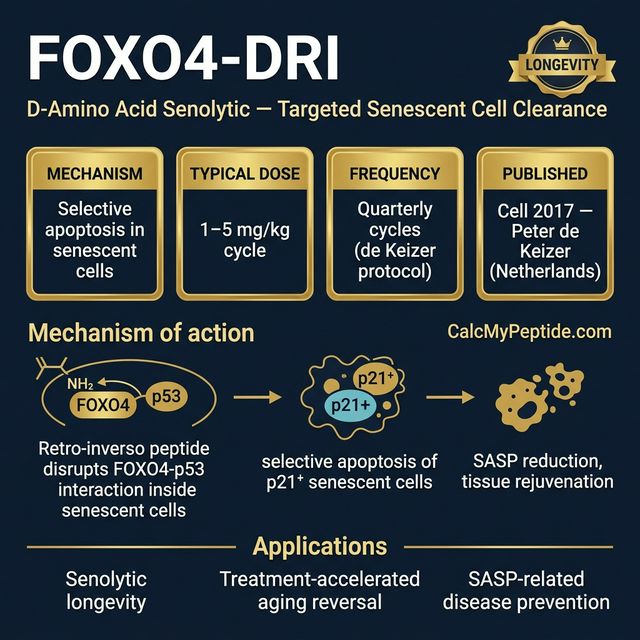
FOXO4-DRI is a D-retro-inverso (DRI) peptide that selectively induces apoptosis (programmed cell death) in senescent cells while leaving healthy cells unharmed. It is the first peptide-based senolytic.
In senescent cells, the FOXO4 protein binds and sequesters p53, preventing p53 from triggering apoptosis. FOXO4-DRI competes with endogenous FOXO4 for p53 binding, freeing p53 to enter the nucleus and activate apoptotic genes. The D-retro-inverso design makes it resistant to protease degradation. In mouse studies, FOXO4-DRI reversed aging phenotypes including fur loss, renal dysfunction, and physical frailty.
Source: PMID: 28340339
📜Background & History
FOXO4-DRI is a D-amino acid retro-inverso peptide designed to disrupt the interaction between FOXO4 and p53 inside senescent cells. Developed by Peter de Keizer at the Princess Máxima Center (Netherlands), it was published in Cell (2017) showing it selectively induced apoptosis in senescent cells — the first demonstration that targeted senolysis with a peptide was achievable. This landmark paper established FOXO4-DRI as a potentially transformative longevity compound. It specifically kills senescent cells (which drive aging via SASP) while leaving normal cells unaffected.
🎯 Research Use Cases
- ✓Cellular senescence clearance (senolytics) for longevity
- ✓Cancer treatment-induced accelerated aging reversal
- ✓Age-related pathology from SASP (senescence-associated secretory phenotype)
- ✓Frailty and physical decline associated with senescent cell burden
💉 Dosing Protocol
| Typical Dose | 5-20 mg/kg body weight |
| Frequency | Every 3 days × 3 doses (protocol) |
| Half-Life | ~2-6 hours (estimated) |
| Common Vial Sizes | 10 mg, 50 mg |
🧪 Reconstitution Example
⚠️Safety & Considerations
Research peptide with limited human data. Initial mouse studies are promising. Very expensive. May cause transient side effects as senescent cells are cleared (inflammatory response). Not recommended for cancer patients. Experimental longevity compound.
⚡Interactions & Contraindications
Experimental compound — very limited human data. Induces apoptosis specifically in p21-positive senescent cells. Theoretical concern: some senescent cells serve protective roles (wound healing senescence, placental cells) — unknown impact with repeated dosing. Use infrequently (quarterly cycles per de Keizer protocol).
🔗Synergies & Common Stacks
FOXO4-DRI clears existing senescent cells; Epitalon activates telomerase to prevent cells from becoming senescent via telomere erosion. Sequential senolytic + senomorphic protocol.
FOXO4-DRI removes senescent cells; NAD+ supports the healthy cells that replace them through SIRT1 and DNA repair mechanisms.
❓ Frequently Asked Questions
How does FOXO4-DRI kill senescent cells?▼
What is the FOXO4-DRI protocol?▼
📖 References
- Baar MP, et al. “Targeted apoptosis of senescent cells restores tissue homeostasis in response to chemotoxicity and aging.” Cell (2017). PMID: 28340339