LL-37
Human cathelicidin antimicrobial peptide with broad-spectrum antibacterial and wound-healing properties.
🔬 Mechanism of Action
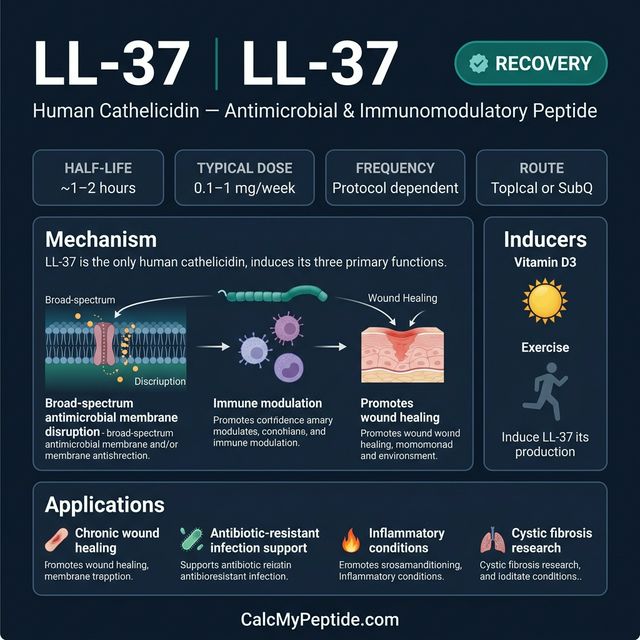
LL-37 (Cathelicidin, hCAP18) is the only human cathelicidin antimicrobial peptide — an endogenous 37-amino-acid peptide that serves as a first-line immune defense. It has broad-spectrum antimicrobial activity: it disrupts bacterial, viral, and fungal membranes by inserting into their lipid bilayers, creating pores that cause cell lysis.
Beyond direct antimicrobial effects, LL-37 modulates the immune response through TLR (Toll-Like Receptor) signaling, recruiting immune cells (chemotaxis), and promoting wound healing. It has been studied for Lyme disease, chronic infections, and biofilm disruption.
Source: PMID: 18082616
📜Background & History
LL-37 is the only known member of the cathelicidin family of antimicrobial peptides in humans, derived from the C-terminus of the hCAP18 protein. It was first described in 1995 by Gudmundsson et al. (PNAS). Beyond its broad-spectrum antimicrobial activity against bacteria, viruses, and fungi, LL-37 also modulates the immune response, promotes wound healing, and shows emerging roles in cancer biology. Its expression is induced by Vitamin D3, exercise, and infection.
🎯 Research Use Cases
- ✓Chronic wound healing and biofilm disruption
- ✓Antimicrobial support in antibiotic-resistant infections (research)
- ✓Immune modulation in chronic inflammatory conditions
- ✓Cystic fibrosis (CF) lung infection management research
💉 Dosing Protocol
| Typical Dose | 50-200 mcg/day |
| Frequency | 1× daily |
| Half-Life | ~4 hours (estimated) |
| Common Vial Sizes | 5 mg |
🧪 Reconstitution Example
⚠️Safety & Considerations
Naturally occurring human antimicrobial peptide. Research use - not FDA-approved as a standalone drug. May cause injection site irritation. Start with a low dose and titrate. Some users report flu-like symptoms during initial use (Herxheimer-like reaction from pathogen die-off).
⚡Interactions & Contraindications
LL-37 can cause hemolysis at high concentrations — stay within research dose ranges. Pro-inflammatory at high doses. May interact with the action of topical antibiotics (additive or competitive effects at bacterial membranes). Vitamin D deficiency reduces endogenous LL-37 production.
🔗Synergies & Common Stacks
LL-37 provides antimicrobial protection at wound sites while BPC-157 drives vascular repair. Together supporting infected wound healing.
GHK-Cu enhances dermal matrix while LL-37 clears microbial contamination — comprehensive wound healing support.
❓ Frequently Asked Questions
What is LL-37 used for?▼
What is the LL-37 dosing protocol?▼
📖 References
- Vandamme D, et al. “The human cathelicidin LL-37 — a multifunctional peptide involved in infection and inflammation in the lung.” Pulm Pharmacol Ther (2012). PMID: 22584291